From a passion for technology to the Valedictorian of the Financial Technology major at PTIT
“If I only studied to get high grades, I think I would miss out on a lot of things in college.” This was shared by Nguyen Chi Tien, the 2026 Valedictorian of the Financial Technology major at the Posts and Telecommunications Institute of Technology (PTIT) with a GPA of 3.65/4.00.
For Tien, the most memorable things after four years of study are not just his academic results, but also his companions, academic competitions, technology projects, and the times he dared to step out of his comfort zone. These experiences contributed to a journey of personal growth, in which the Valedictorian title is the result of proactivity, perseverance, and continuous learning.
Choosing a major of the future
Four years ago, when Financial Technology (FinTech) was still a relatively new major, not many high school students fully understood its curriculum and post-graduation career opportunities. This novelty made Nguyen Chi Tien curious and decided to learn more about it.
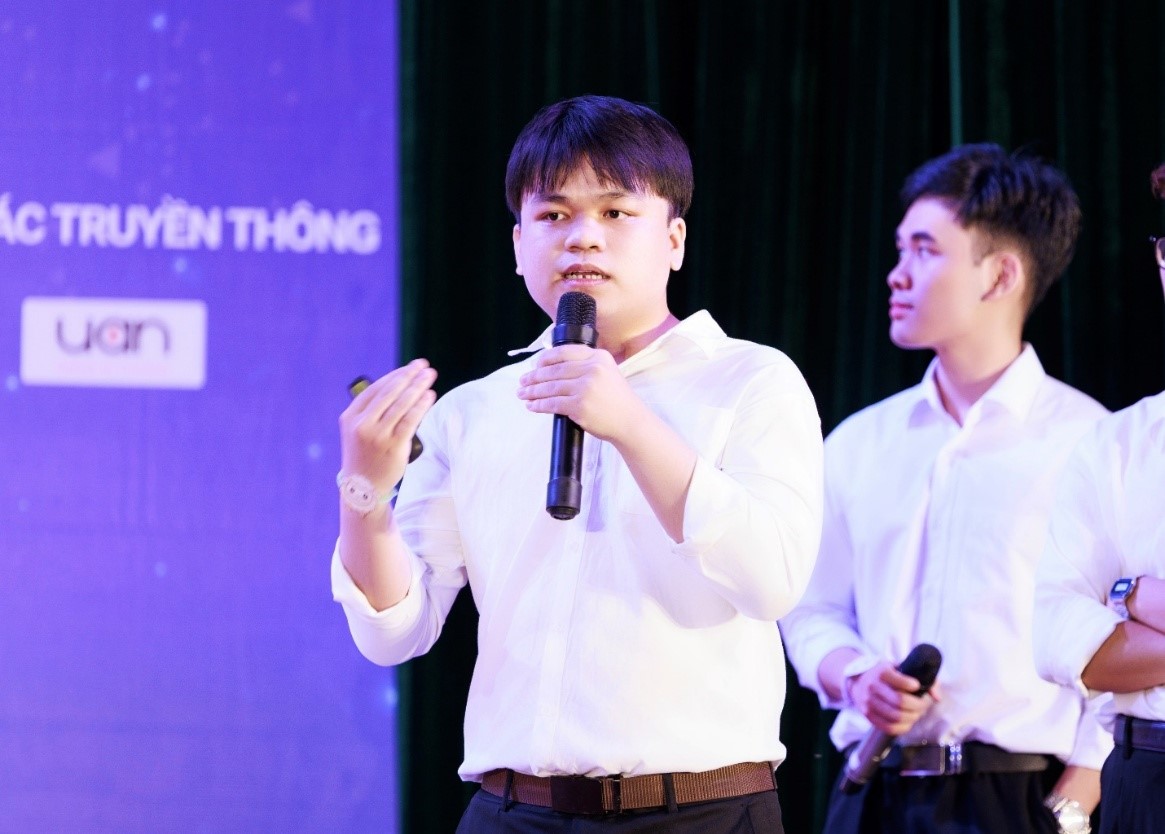
As a student passionate about technology, Tien wanted to study in an environment that combined technology and finance—two fields increasingly intertwined in the digital transformation process.
PTIT became Tien’s choice due to its strengths in information technology, artificial intelligence, data, and digital transformation, as well as its interdisciplinary training orientation, helping students develop both technological thinking and financial professional knowledge.
“I was attracted because this is a major with a lot of prospects. PTIT also has strengths in technology, so I believed I would have a suitable environment to study and develop,” Tien shared.
That decision marked the beginning of a four-year journey with many opportunities but also numerous challenges.
According to Tien, the biggest difficulty for FinTech students lies in its interdisciplinary nature. Students must not only learn programming, data processing, and new technologies but also grasp knowledge of finance, economics, banking, and business operations. In addition, Financial Technology is a fast-changing field, requiring learners to constantly update their knowledge and technology.
“I spent quite a bit of time self-studying through materials, online courses, and practical projects. That process helped me form the habit of proactively researching problems instead of just receiving knowledge in class,” Tien stated.
University is not just about classroom hours What Tien remembers most after four years of university is not the exams or grades, but the friends who accompanied him along the way.
“I met very good friends. We studied together, participated in competitions together, and always supported each other from our first days entering the Institute,” Tien shared.
From that companionship, many memorable experiences were formed. Outside of class hours, Tien and his friends participated in academic competitions, practical case studies, hackathons, and innovation playgrounds. Each activity was an opportunity for him to apply his knowledge, approach practical problems, practice critical thinking, and improve teamwork skills.
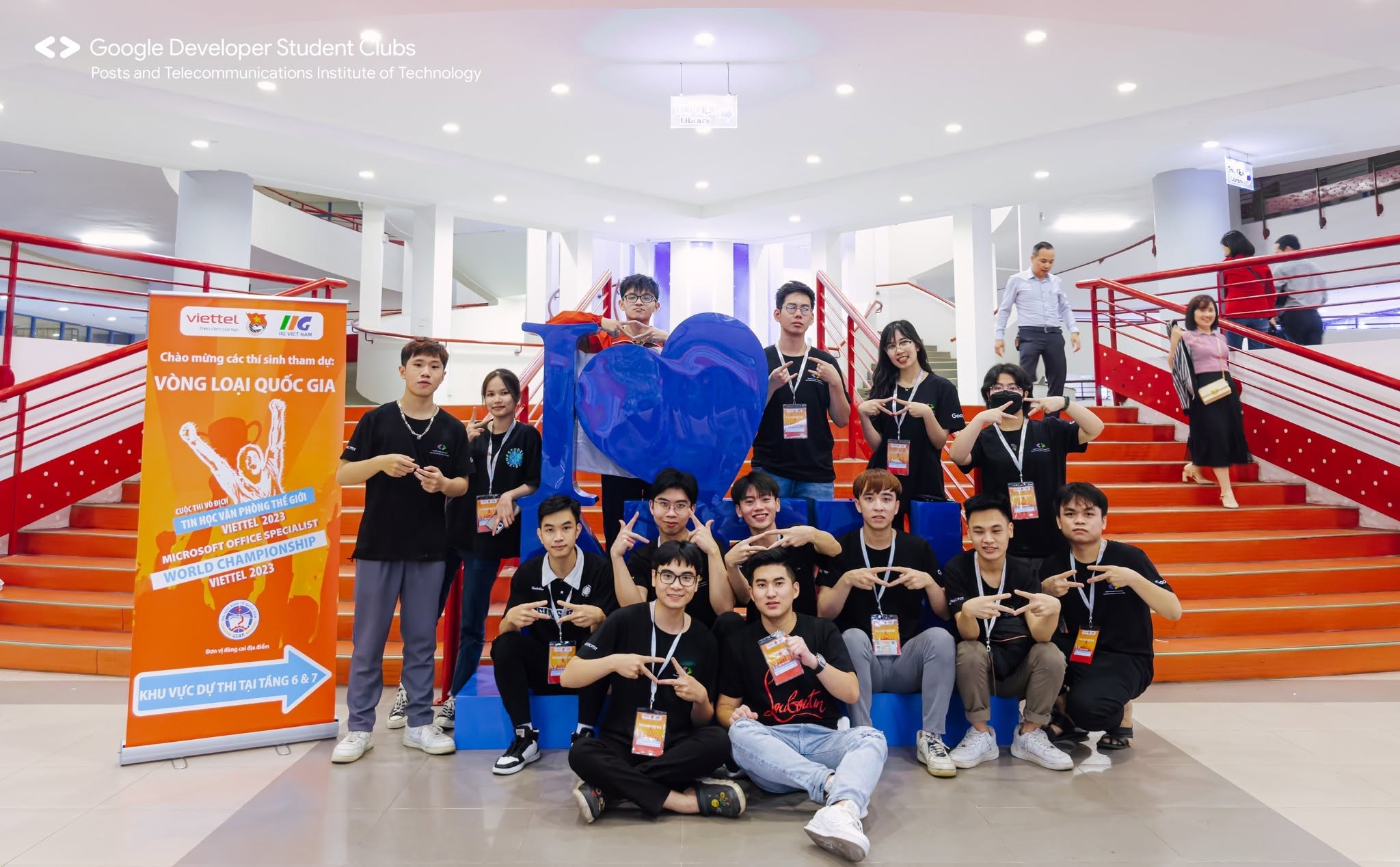
In his early university years, Tien participated in the activities of GDG on Campus PTIT. This was an environment that helped him connect with a community of technology-loving students, listen to career sharing from seniors, and better understand the development paths in the technology field.
Another milestone in Tien’s journey was the PTIT Bootcamp 2025 – Hack to Lead program. Through this program, Tien was exposed to innovative thinking, learned how to identify problems, build solutions, and gradually turn ideas into products with practical value.
Looking back at the journey, Tien believes that extracurricular experiences helped him grow just as much as classroom hours. Through each competition and project, he better understood his own strengths and weaknesses, while learning how to cooperate, adapt, and persistently pursue goals.
AI is a tool, not the solution Studying during a period of strong artificial intelligence development, Tien considers AI a companion, but not a tool to replace human thinking.
He uses AI platforms to assist in learning new knowledge, summarizing documents, suggesting problem-solving approaches, and supporting programming. As a result, Tien can save time on repetitive tasks and focus more on in-depth analysis and research.
“Thanks to AI, I save a lot of time to focus on researching more important content. However, the user must still understand the problem clearly, know how to verify information, and take responsibility for the final result,” Tien said.
According to Tien, the value of AI does not lie in doing everything for humans. The most important thing remains the ability to identify and solve problems. AI is only truly effective when the user clearly understands the problem to be solved and knows how to choose the appropriate method.
This viewpoint also reflects the characteristics of the Financial Technology major, where technology is not the ultimate goal but a tool to solve problems for businesses, banks, and financial markets.
The training foundation at PTIT helps students develop the ability to program, process data, and build analytical models while being equipped with professional knowledge to correctly identify practical problems. The combination of technological capacity and specialized knowledge becomes an advantage for FinTech students entering the labor market.
Especially in the finance and banking sector, where accuracy, security, and data verifiability are of great significance, Tien believes that AI users must possess even stronger critical thinking, professional ethics, and responsibility for their decisions.
Growing up from the learning environment at PTIT Throughout the conversation, Nguyen Chi Tien repeatedly mentioned the companionship of the lecturers and the learning environment at PTIT.
For him, what is valuable lies not only in professional knowledge but also in the guidance, encouragement, and experience sharing of the teachers during the learning and research process.
“The teachers are always ready to share experiences, provide orientation, and encourage students to proactively learn and try new things,” Tien stated.